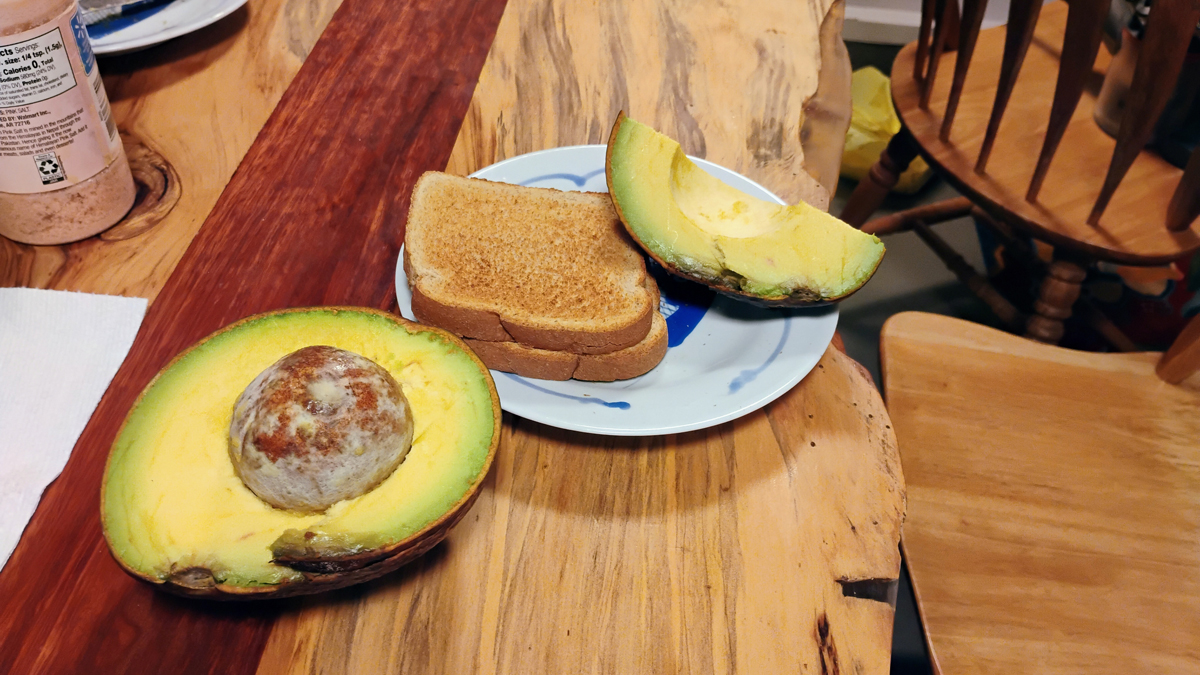
A couple of days ago, our airbnb hostess, Larisa, gifted us with an avocado from her tree, and it was the biggest avocado we've ever seen! This morning, it was finally ripe enough to eat. Oh, boy!!! It was so big, the two of us could only eat half of it this morning. Delicious! We'll finish it tomorrow.
Look at the size of that thing!
Inspired by the NASA folks last night, today we decided to head back up the Saddle Road to where we'd turned off toward Mauna Kea days ago, but this time we'd turn the opposite direction and drive up Mauna Loa.
Just before leaving the Saddle Road, we stopped for a short hike. Pu'u Huluhulu Cinder Cone Trail is about a mile long, with about 200 feet of elevation gain. The path winds up and around Pu'a Huluhula (hairy hill), an extinct, forested cinder cone surrounded by lava fields, with views of both Mauna Kea and Mauna Loa. At the top is a small area roped off as sacred, with a totem and some offerings.
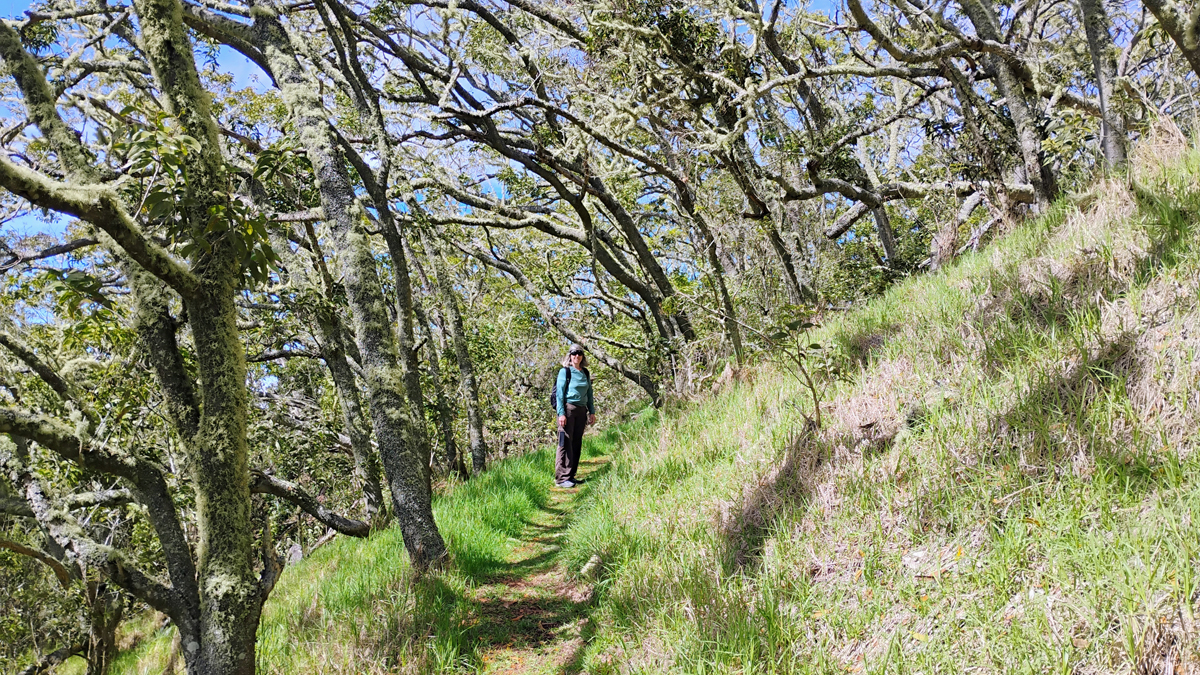
Jana on the Pu'u Huluhulu Cinder Cone Trail
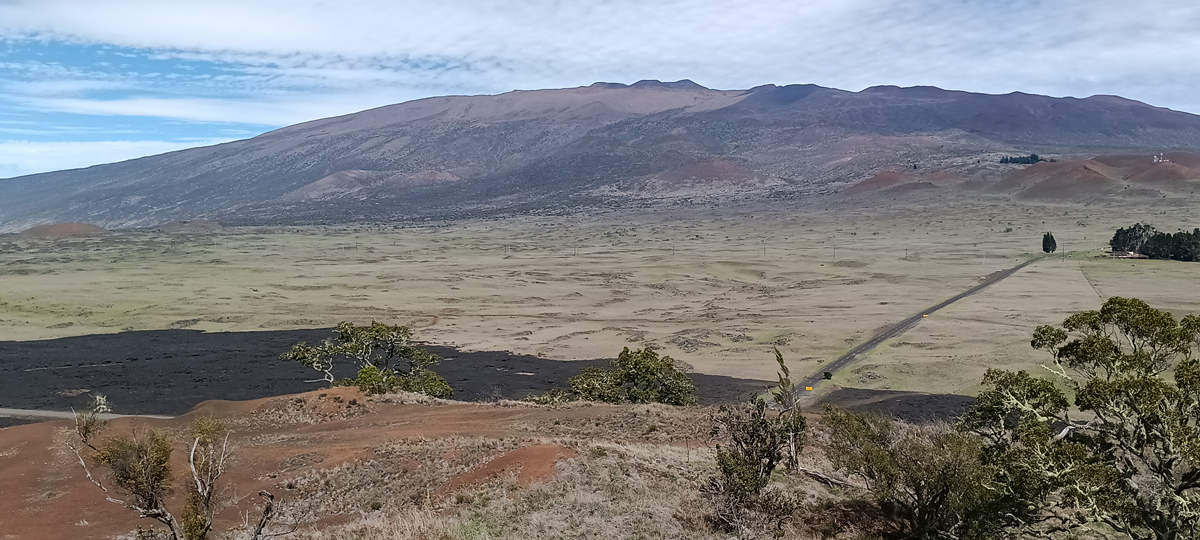
Mauna Kea
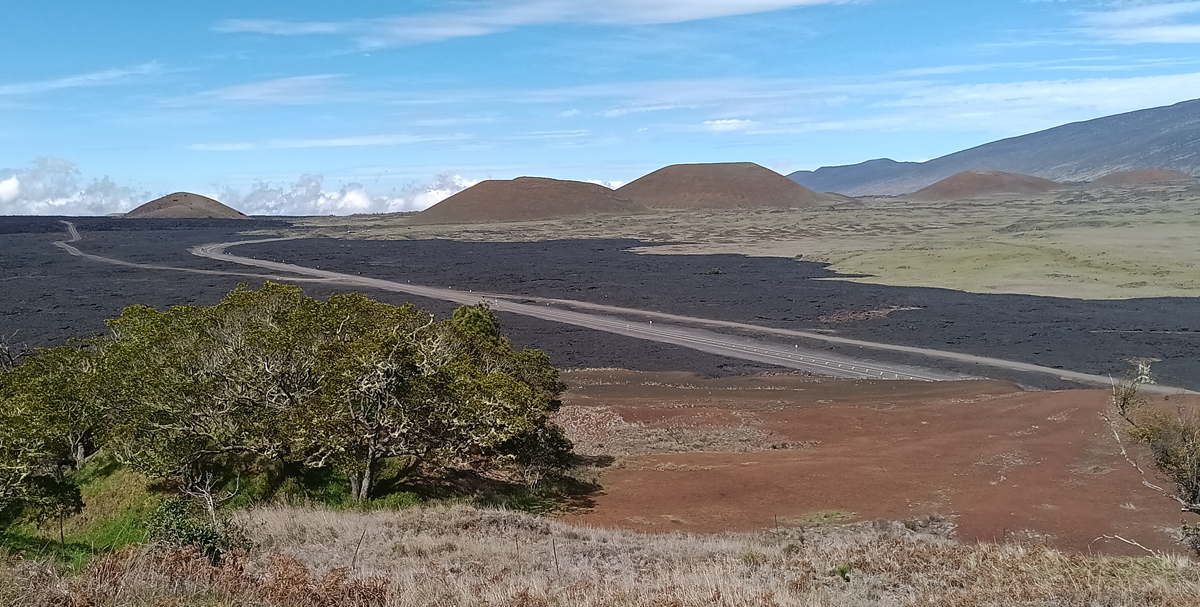
Cinder cones along the Saddle Road
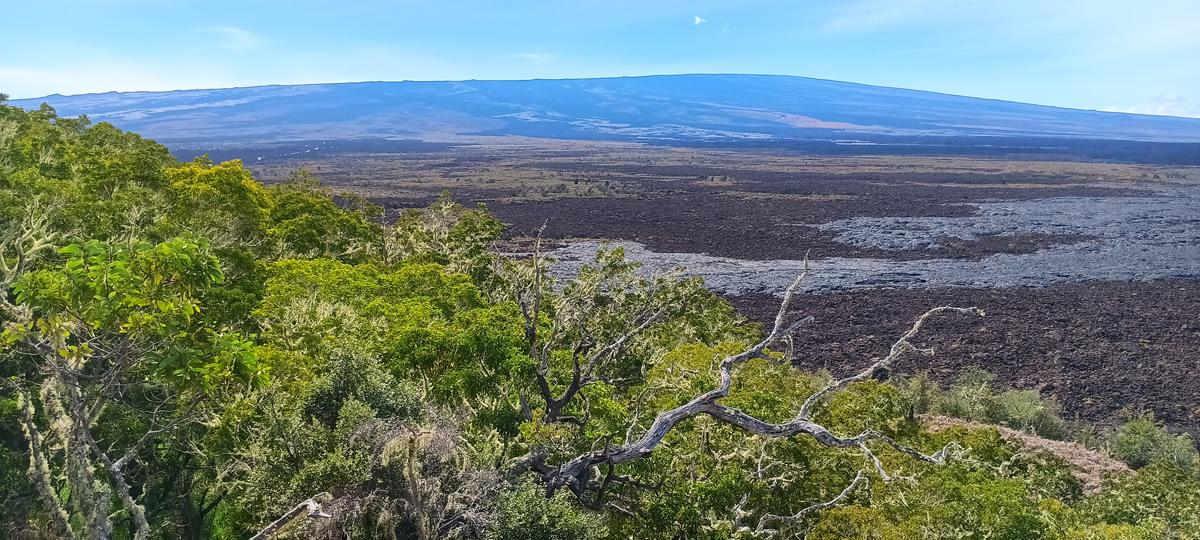
Mauna Loa
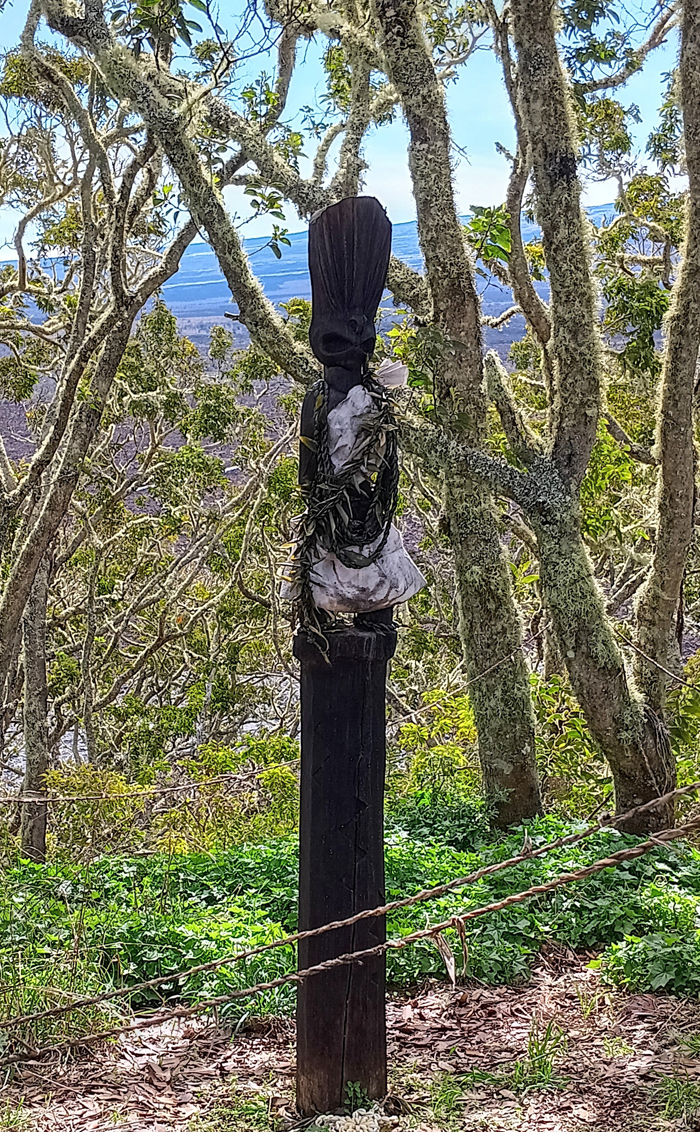
Hawaiian sacred site
In spite of the name, Mauna Loa Observatory Road will not take you to the Mauna Loa Observatories – at least not anymore. The last six and a half miles of the once 17-mile-long road is now obstructed by a massive lava flow from a November 2022 eruption of Mauna Loa. After three years, the thick hardened lava remains too hot for grading work to be done to rebuild the road.
The surviving portion of Mauna Loa Observatory Road is a nicely paved, narrow lane running through a lunar landscape of lava before it ends abruptly after about 10.5 miles. There are plenty of turnouts if you need to pull over, but we didn't meet a single other vehicle. The view went on for miles!
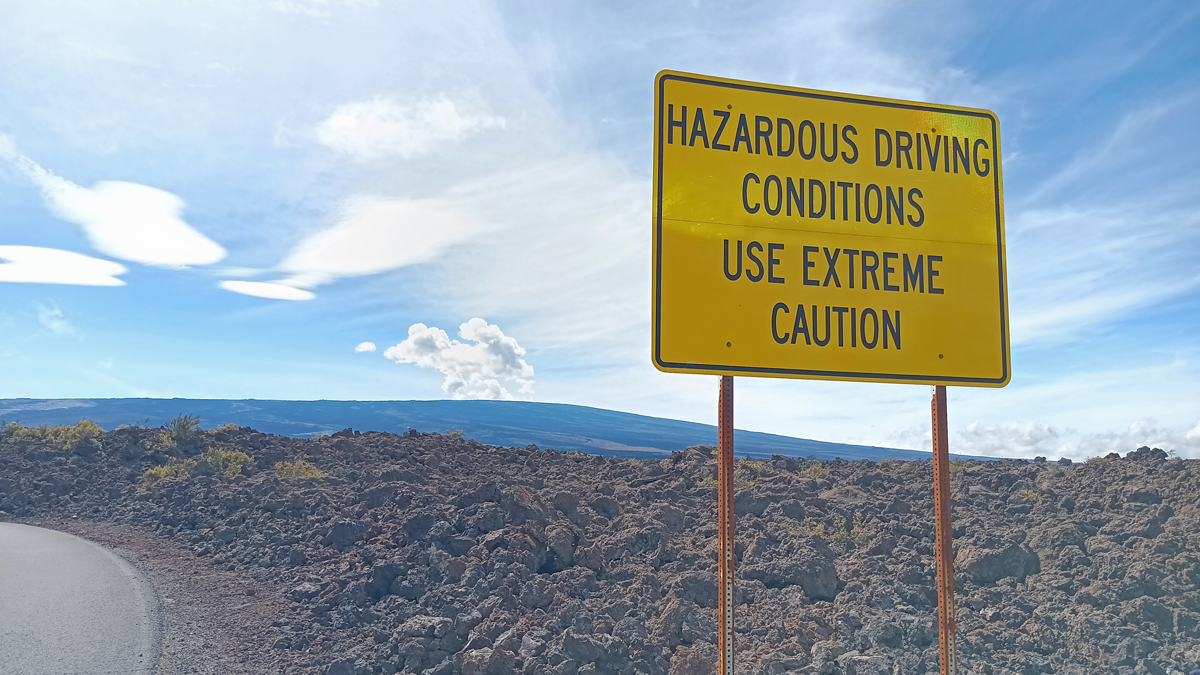
Here we go!
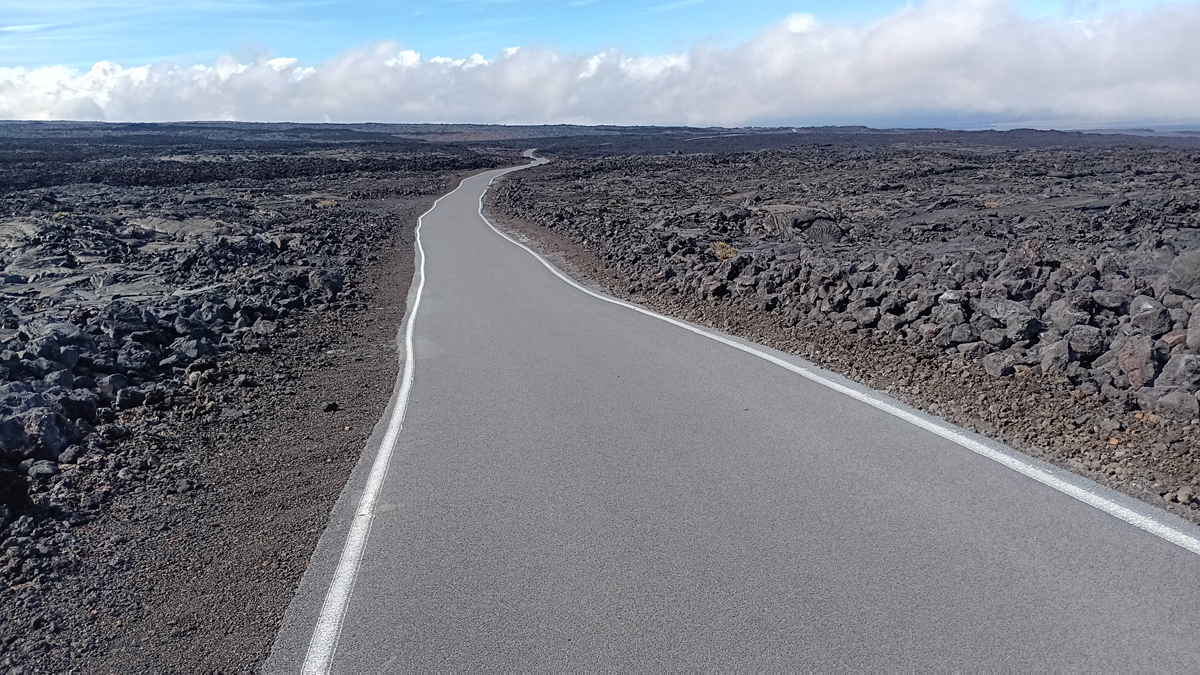
Mauna Loa Observatory Road
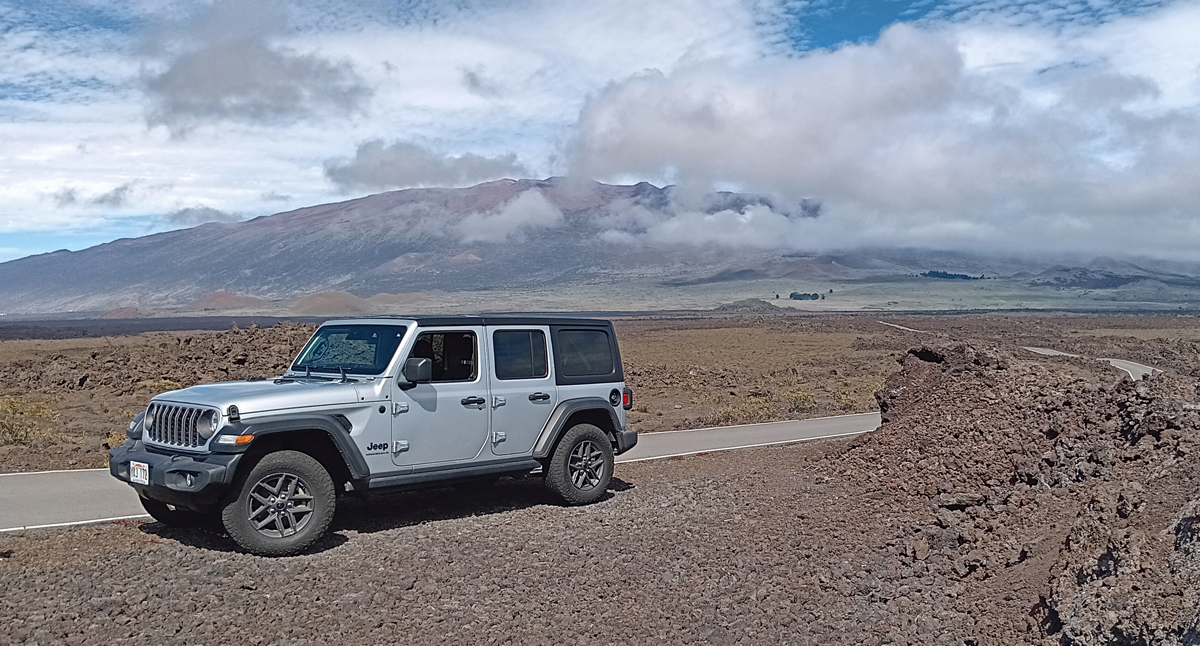
Mauna Kea from Mauna Loa
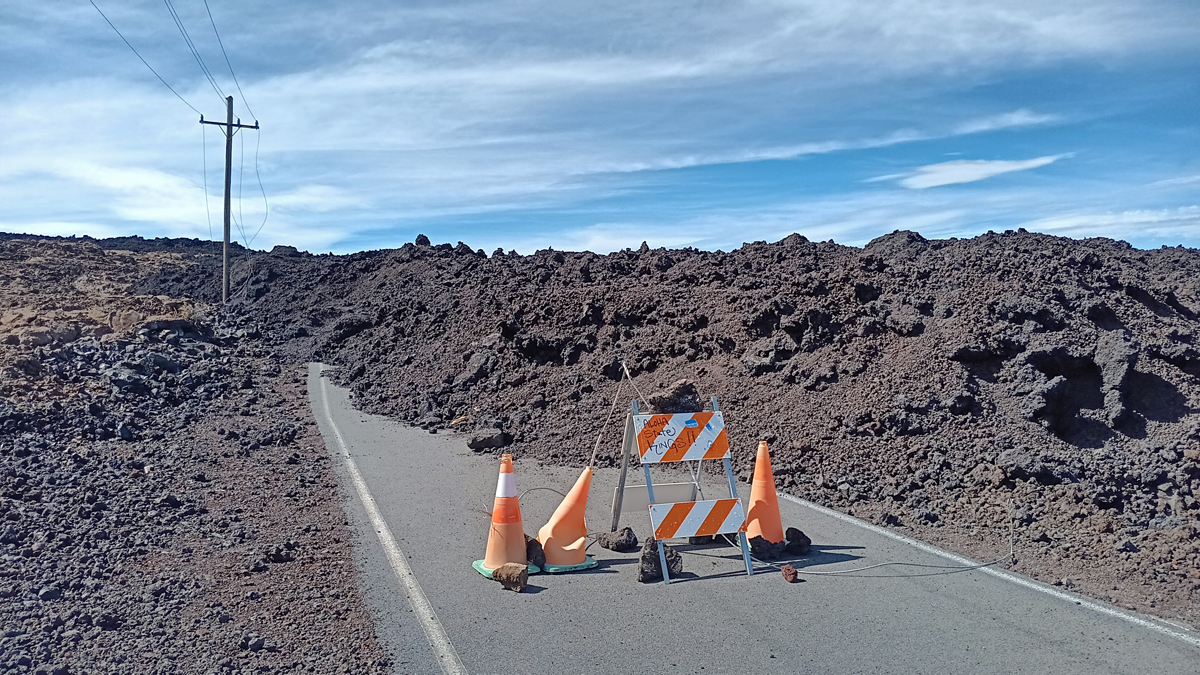
We've gone about as far as we can go
Access to the weather and solar observatories high on the flank of Mauna Loa are completely inaccessible by vehicle, foot, or any other means – except by helicopter. The observatories are still in use today despite the hardship of getting there. Most operations are currently done remotely, and when scientists and engineers do need to visit in person, they have to be prepared to evacuate within 15 minutes. I guess that's a hazard of building on the side of the largest volcano in the world and one of the most active!
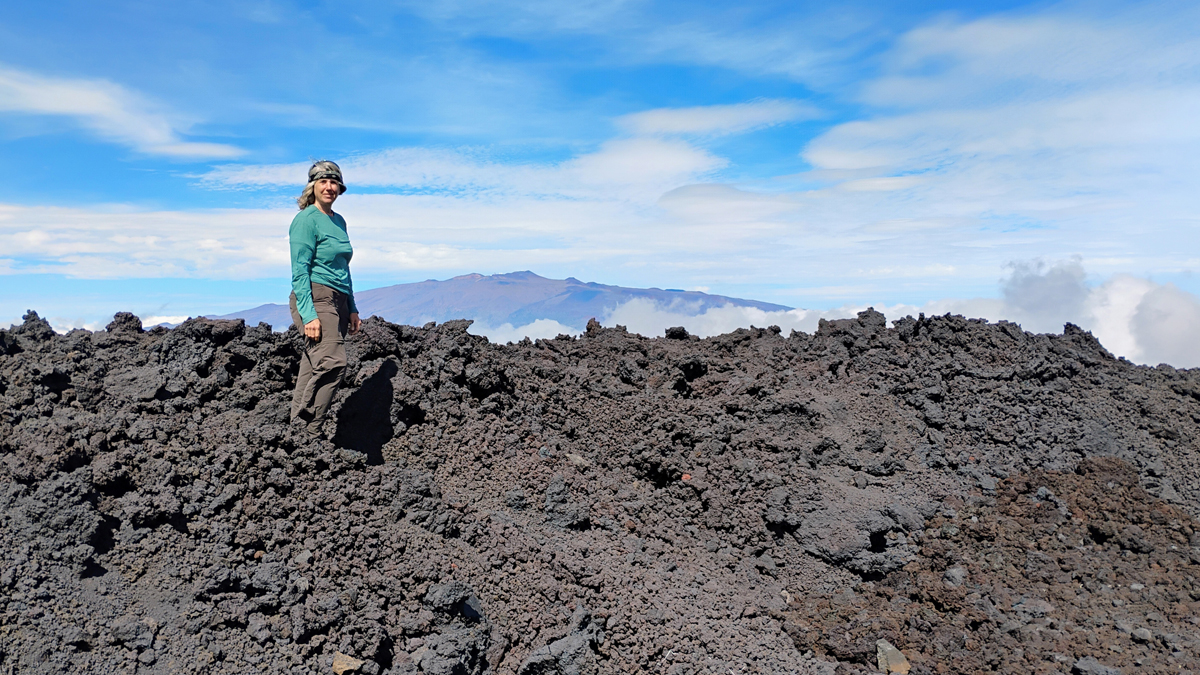
Jana at the end of the earth
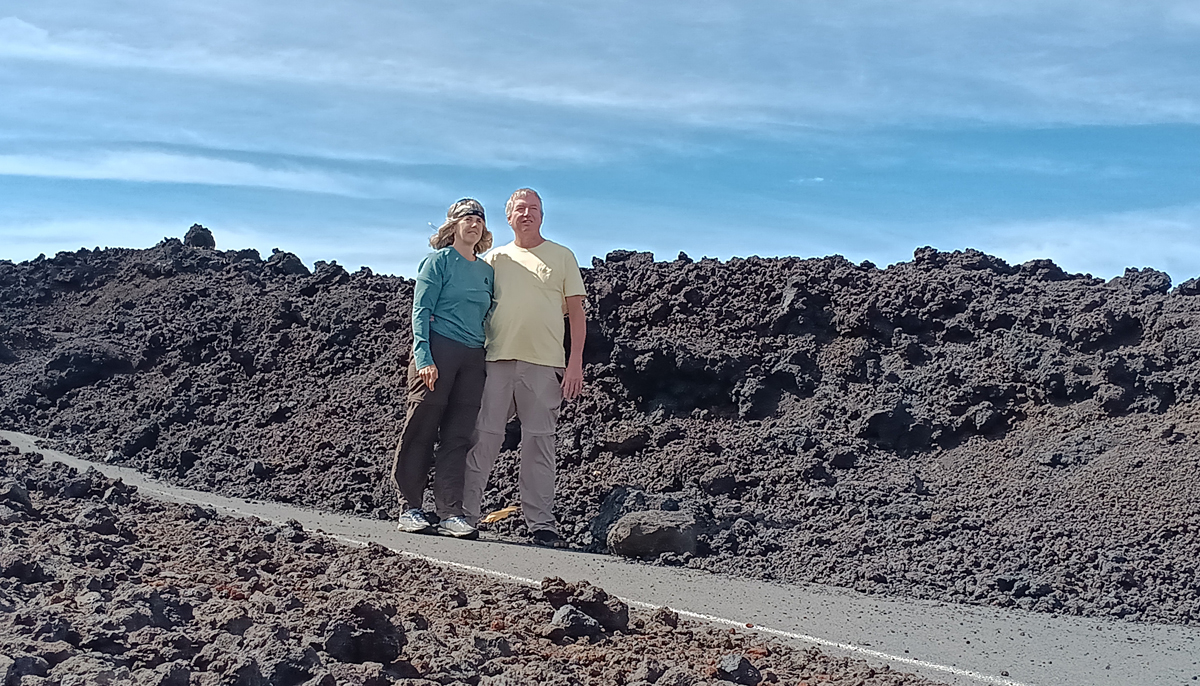
Where shall we go next?
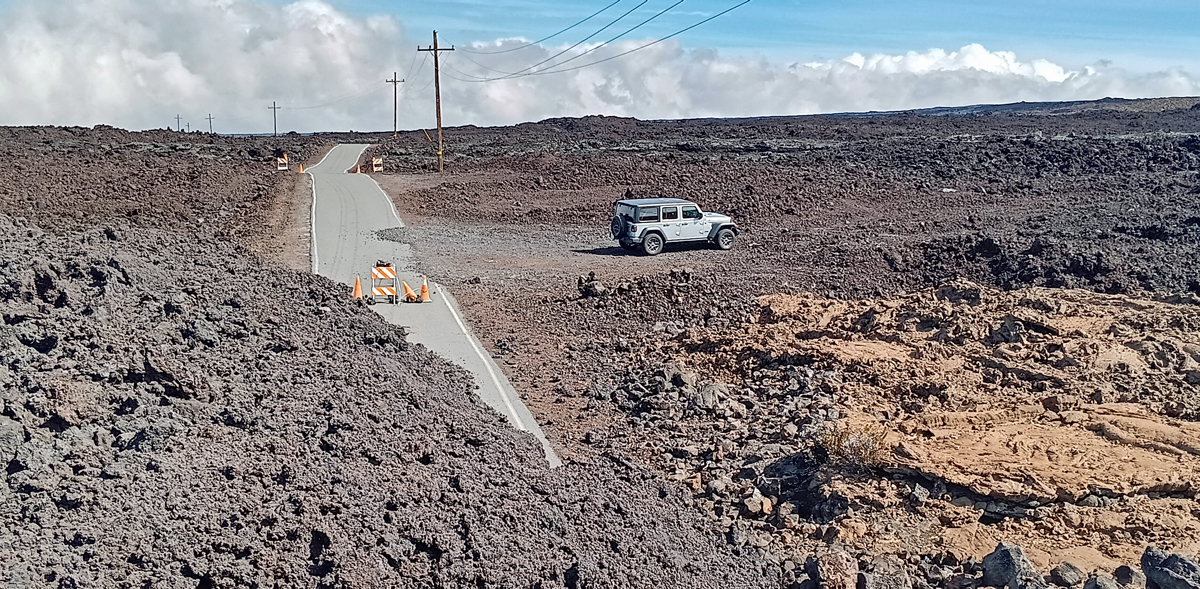
From the mound of lava covering the road
Tom's cousin Kelly and her colleagues did a site visit to the Mauna Loa Observatories earlier this week that started by driving to the current end of the road, where they were then picked up by a helicopter. Tom and I weren't able to do that, but their photos and descriptions of the road inspired us to come see it for ourselves. We're glad we did. It was otherworldly!
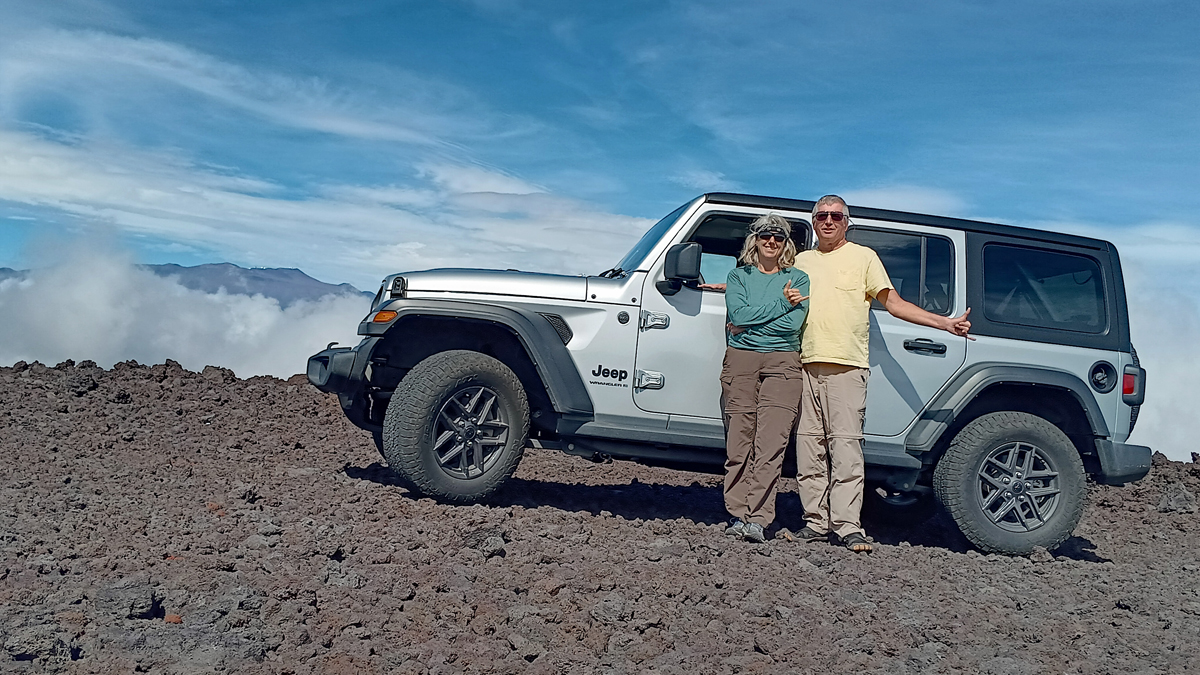
Jana and Tom self-portrait
Back in Hilo, we took the opportunity to swing back by Pe'epe'e Falls and Rainbow Falls, both of which we'd visited a few days ago in the pouring rain. We enjoyed them even more the second time around!
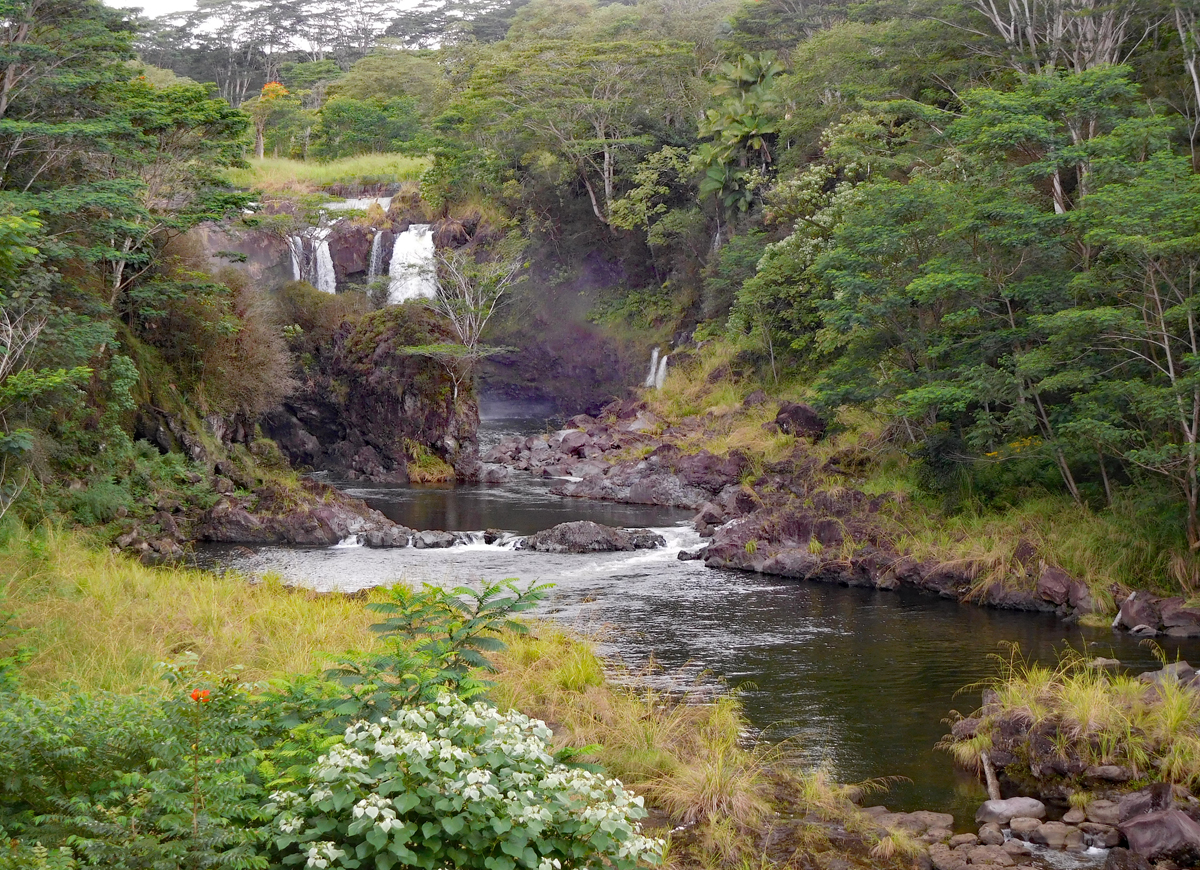
Pe'epe'e Falls revisited
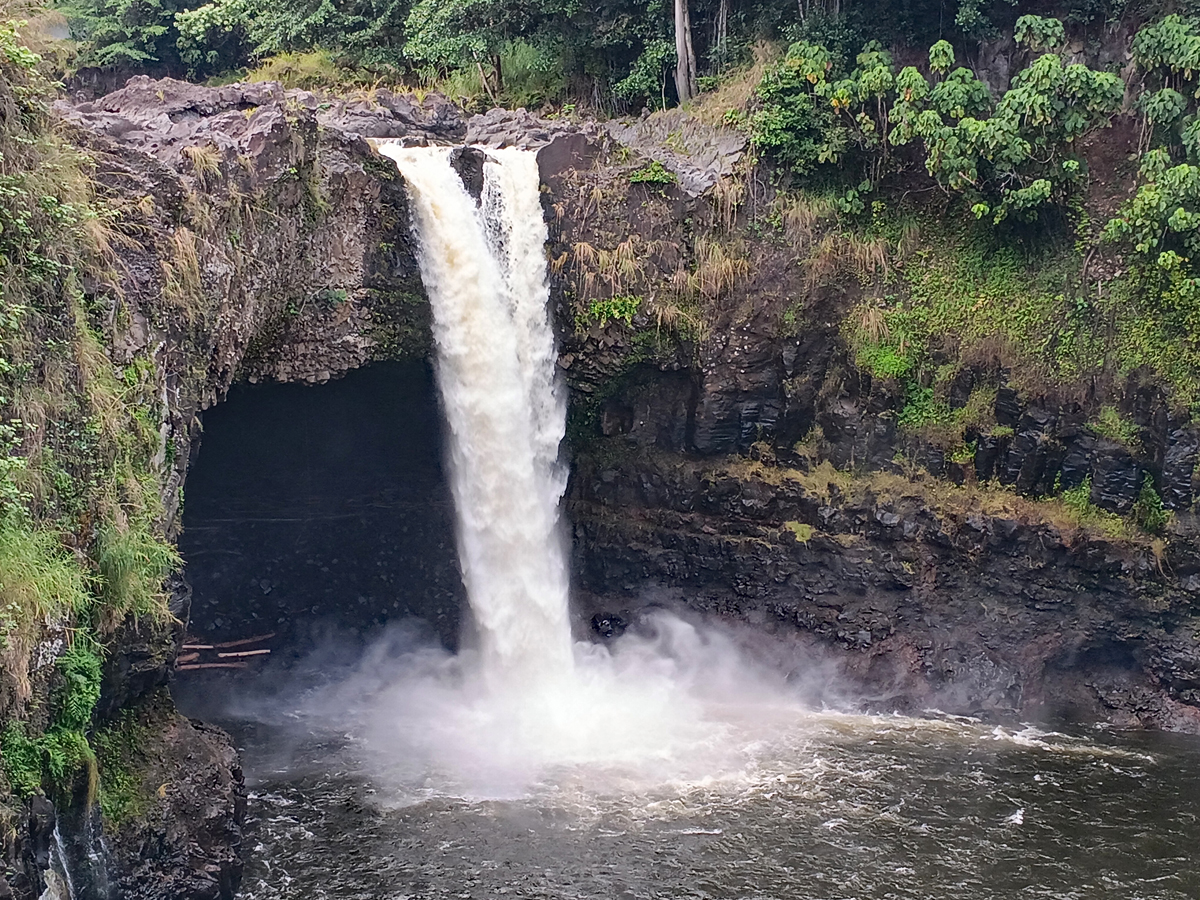
Rainbow Falls when it's not raining
In the several days since we'd last visited Hawaii Volcanoes National Park, Kilauea Volcano had gotten a lot more active, and tonight was our last best chance to see glowing lava. So we drove back up to Volcano Village late in the afternoon, had a quick, delicious, and very spicy bite to eat at Thai Thai Bistro & Bar, and then headed into the park just after sunset.
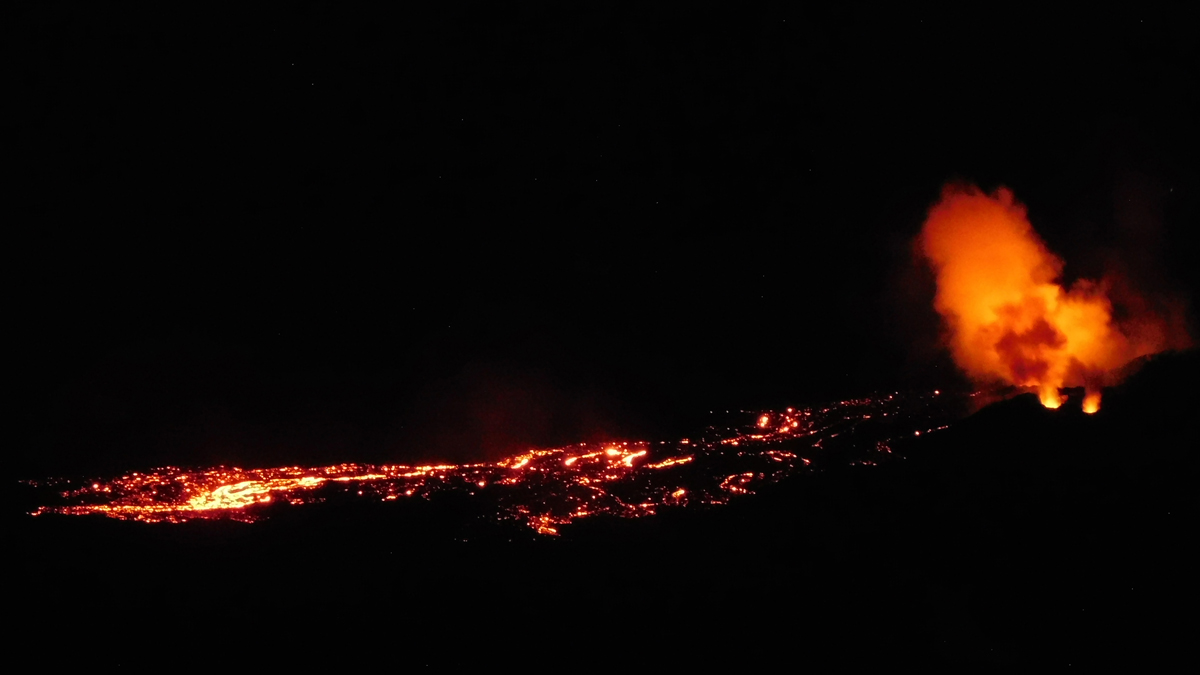
Kilauea gushing lava
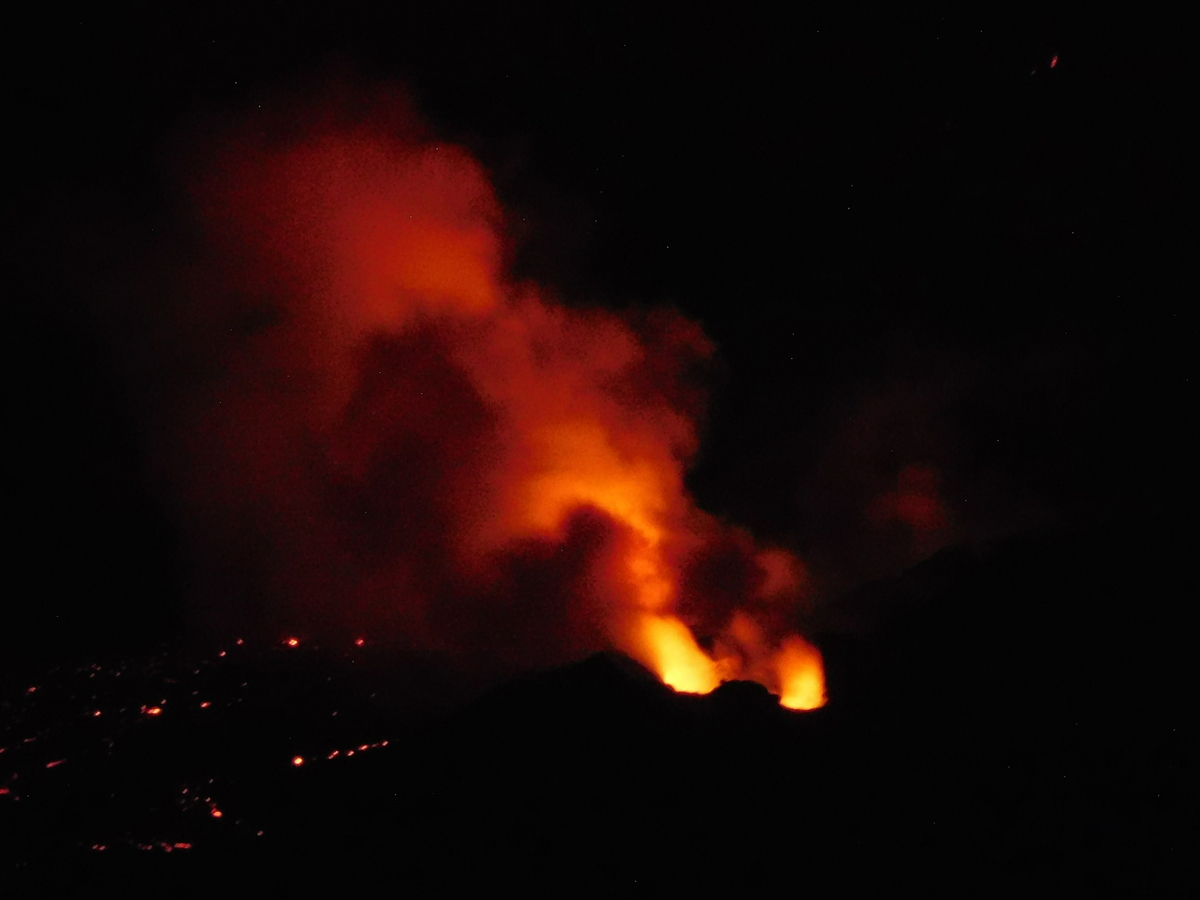
Dragon's eyes
The current Kilauea eruption has been ongoing for almost a year, and although this night's 30-plus-foot lava fountains weren't enough to qualify as an official “episode,” we saw lots of flowing lava and were very happy. Still, we had one more day left on the island, so there was still a small chance for something more extreme...